|


What Is Service? An Interview with John Morton by NDH editor, photos by David Sand
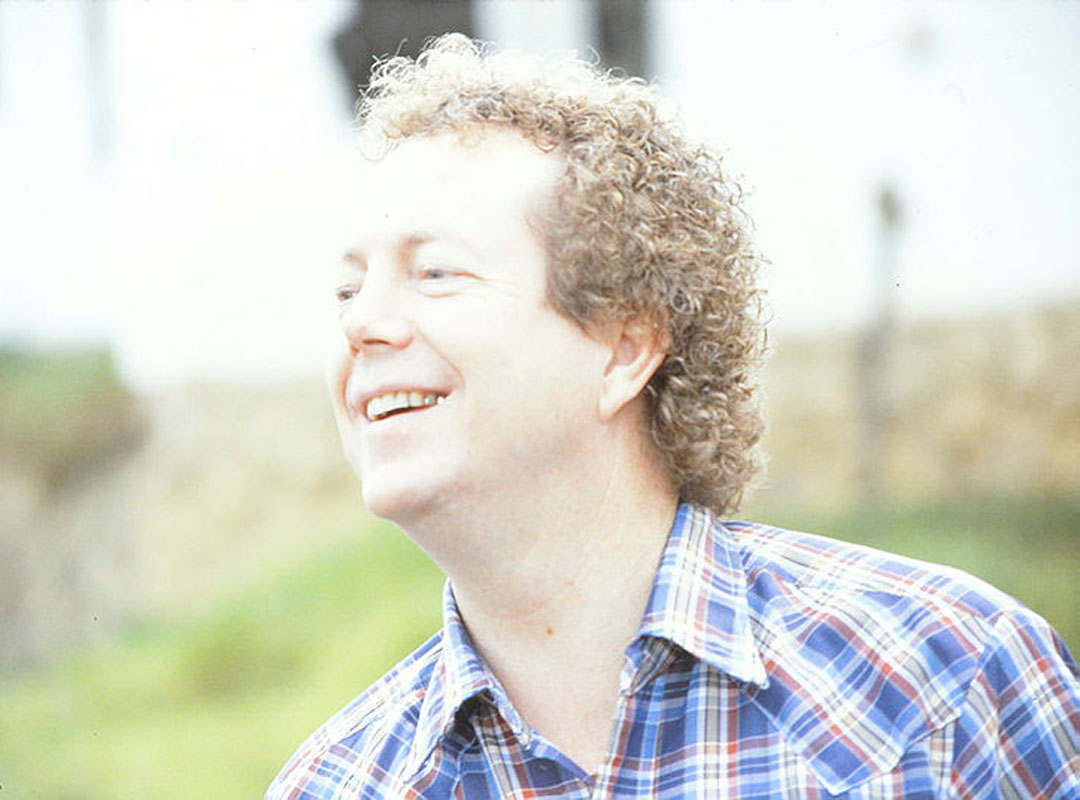
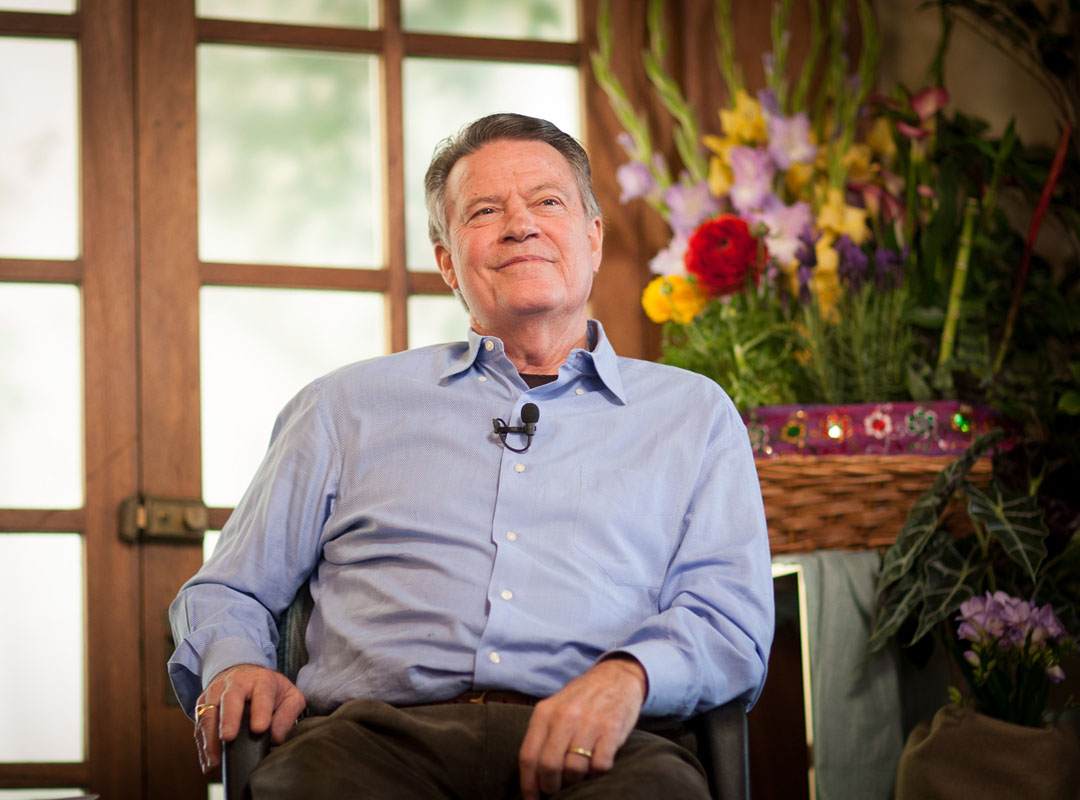
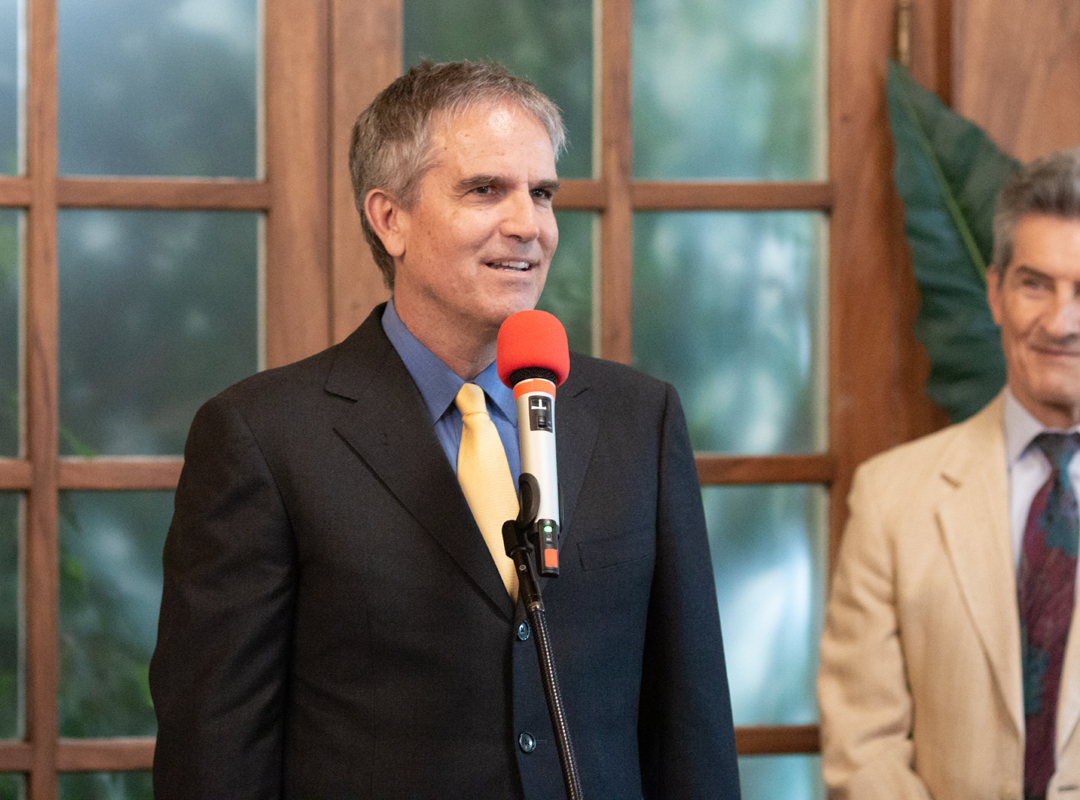
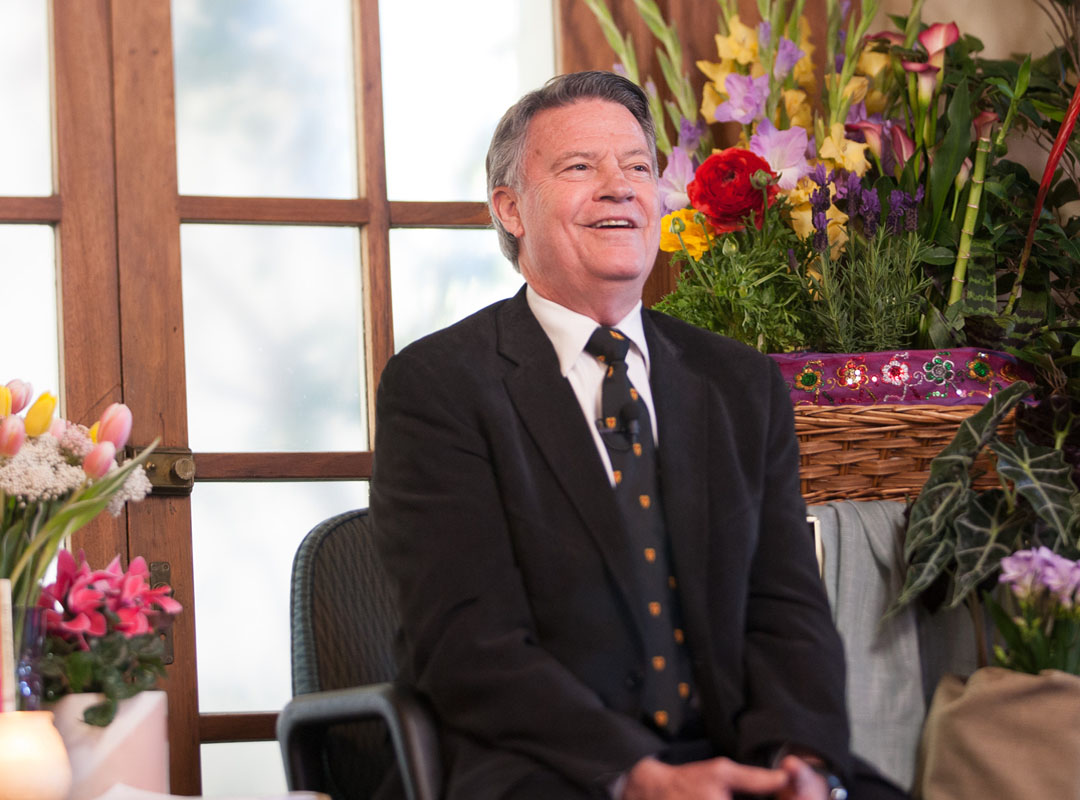
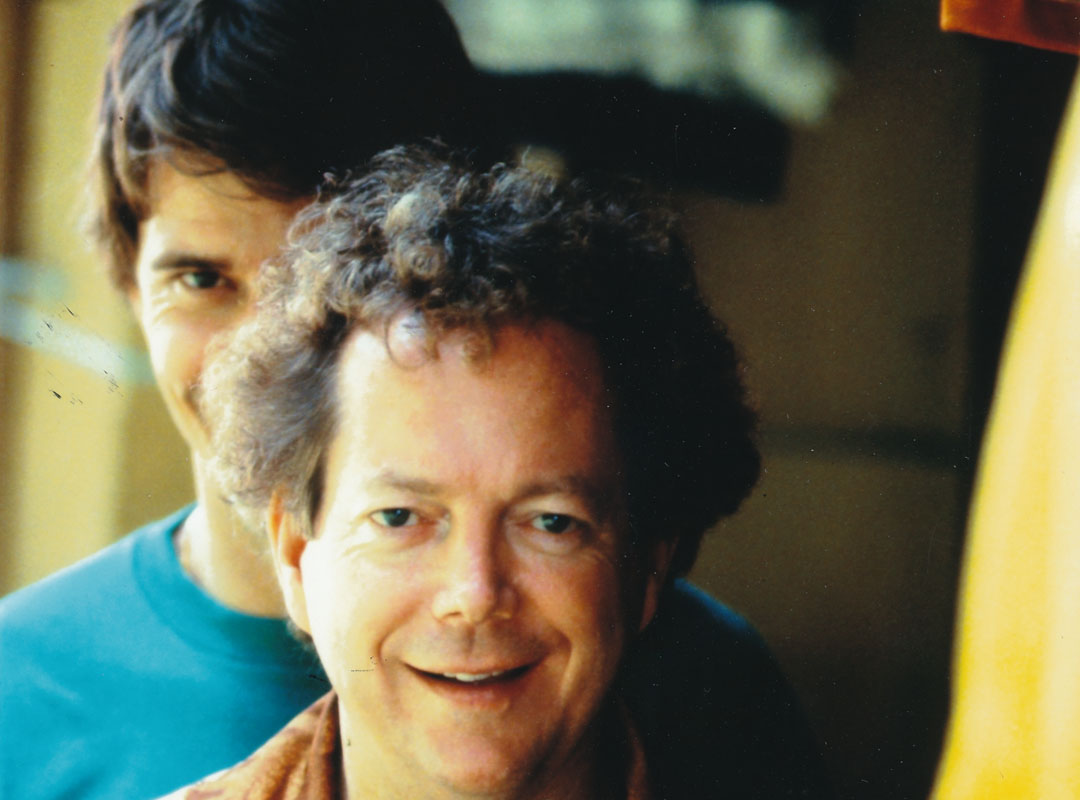
 | John Morton, Spiritual Director of the Movement of Spiritual Inner Awareness (MSIA), being interviewed by David Bransky, D.S.S.
|
| |
|
This article is taken from a recent interview with John Morton regarding service, the nature of service and how to serve. Doctor of Spiritual Science graduate, David Bransky, conducts the interview. John Morton is the Spiritual Director of the Movement of Spiritual Inner Awareness (MSIA).
|  |
David Bransky
|
| |
DB: Over the years, our conversations around service have been really pivotal for me, both within our organizations but also in that service stuff that I’ve done outside of our organizations. Service really does seem to be something that’s such a signature aspect of our work. There was a friend of mine who went up to see you in Santa Barbara, and this was four or five years ago or more. And the thing that he walked away with, the thing that really struck him was ahead of time, when they were setting up the room for you, John-Roger was out there with people simply setting up chairs. And, that held meaning for him, and I think in a way catches whatever that is.
JM: It’s a relevant subject because it certainly relates directly to ministry. It relates to moving into a divine consciousness. It relates directly to taking care of others. And, I often tell people, “Yes, right in the core of what’s important to do with your life is take care of yourself, and as soon as you’ve done that, you’re now on to take care of others as a responsibility.” So it will be there for you to give the value of what you’ve received – to give it to somebody else, or to give it in some way as a contribution, let’s say, to the world. That’s how I see it, it comes more as a responsibility. And I think it also reads like, “Who or what is an elder?” Somebody who has received and processed life experience, and now they’re in a position to impart that value to those who are gaining life experience – to the young, to the children, to those who are coming through what someone else has already accomplished.
DB: One of the things that occurs to me as you’re talking about the responsibility to then “pass on,” especially that generational thing, is that whole group of baby boomers that are approaching, at least some of them, approaching retirement. There is a thing called a Senior Core and that age group might be more open to addressing the transformative quality of service because I think that’s a life stage where people are looking at mortality and what’s beyond that.
JM: Well, I see it as something that works as virtue, or at least like virtue, and so it becomes its own reward because it’s a form of what’s important to do – give. And, there’s a direct relationship to receive. So in our capacity to receive, and that we have received, then comes another capacity – to give. And, when someone understands that, then I think they put themselves in a position, as they do it, to have a very satisfying, fulfilling, nurturing life. You can’t run as fast, you can’t think as fast, maybe there’s a fair amount of pain or discomfort that accompanies your daily routine. So, it’s like, things that are shutting down that are no longer in a way available, and a person could get bitter about that or they could turn and say, “Well, what is available and what am I good for now?” You know that I’m not good for these things, “I’m too old” or “I don’t have that ability anymore,” or “They don’t want me, I’m over the hill,” etc. Well actually you’re in this great position to give, to share your knowledge, your wisdom, your life experience, and to do that with joy, as a joyful giver.
"God loves a joyful giver.” What’s that statement about? I think it’s the natural order. It’s like you line up and you do the intention of God for a well lived life and a well lived life is one that takes and gives. I think if we looked at it we’d say obviously as we come into the world we’re in a position to really need to take, like, what can an infant do for themselves? Well, not a whole lot that someone else can’t do better. Such as, where do they find food? How do they find food? Well, you know, they might not if some how someone or something doesn’t step in. And then I think that starts shifting and obviously we become responsible, we become capable, and then we become less capable. I think that’s the natural order except in an area like wisdom. The faculties to retain our wisdom in large part are retained and they’re to be shared. So, to me, it’s a natural order of a well lived life and it’s a sign of a person’s maturity. It shifts from “Give me,” and “Let me,” “What’s in it for me?,” “I’m doing this for myself and my own satisfaction and pleasure,” to “I’m giving back,” “I’m doing this for someone else’s satisfaction, to help them, to give them something valuable.”
And a great turning point is there in terms of parenting. That’s a great example. In a way it's like “Why are you getting married?” “Well, I want to share my life and I’m in a place to find someone on an equal basis and we share and we build something.” “Well, what are you building this for?” If you build a big pile of all your accomplishments, and your riches and wealth, what does that really mean if you don’t share it? I find it has less meaning until it’s shared. So a beautiful home doesn’t have a lot of meaning if it’s just two. It has more meaning where there’s a group that can come in and kind of share the bounty or the wealth. And obviously a family is in a natural order. So another measure of our maturity is do we give over to that? Do we realize there’s a turning point there to start giving back to somebody. And sure, it’s still “I’m still building, I’m still growing.” But that would be a sign, if a person has that awareness of the consciousness to serve, and they parent. But, it could be in other ways. Can you be a good friend? Can you be a good neighbor? Can you be a good employee? You know, simple things like “Well, they’re not paying me to do that.” “I know, but it’s there to do.” So it’s a work to be done in this place of employment. Or it’s like “Well, that’s not my job.” “But it’s someone’s job. It’s a job of those who work here.” Why not do it because it needs to be done? And, it’s not about “They didn’t pay me to do that,” or “It’s after five o’clock I have to leave now.” That to me is another sign of, “Do you have that consciousness where you’re willing to do something extra beyond what’s in it for you?”
DB: I think that the cycle’s just happening all the time. If someone’s in a taking cycle there is at least an attempt for greater health, for greater wealth, happiness, all those things. And yet we know, or at least my experience is, those are byproducts also, very deep byproducts, of that giving dynamic and that giving cycle. That there is, for me, that experience of health, wealth, and happiness, and abundance and so forth, you know, I’m sure the touching and the loving. So, it just occurs to me that as you describe that process of getting older it’s not like that result is being denied, it’s just a very different process to go get it as those other things are more diminished.
JM: Yes. My point of view is as long as we’re in this world there’s something to be gained. There’s an advancement, a growth, an opportunity to expand, to lift, to move into greater experience. However, there’s transitions of “What will grow mean?” It isn’t necessarily the same thing that grew me when I was seven, or fourteen, or twenty one and so on. There’s an awareness that it’s shifting and shifting into different aspects of who we are. And so there would of course be an opportunity to serve at any time in our life. You know, as a boy scout or a cub scout or something like that. The opportunity to start experiencing sharing and caring that extends to others or situations is there all along the way. To me there’s kind of a grander dynamic as we get older, because we have been enriched by life experience and we’re building up a reservoir of wisdom and knowledge and the ability to serve is gaining just from our life experience. You know, kind of a crude example is the thief, or something like that, who then teaches law enforcement how to catch a thief and how they think and the dynamics of that. And it’s strange because then, well, they’re serving. They now have a respectable, honorable occupation. Literally at times working for a law enforcement agency when they were a subject of their search, you know, their wanted, top ten wanted or something like that.
DB: Kind of the idea that anything can be used in the spirit of service.
JM: Right, using everything for advantage, upliftment, learning, growth. So, even the negative experiences contribute to a wisdom field and something we can pass on to others. Like an angel at the gate saying, “If I were you, I wouldn’t do that. I did that and there are better choices. Let me help you see some of those choices that you could have.”
Whatever you would find that represents what J-R teaches and what MSIA teaches about service is going to be something that’s universal and open to all people if they choose. And it is something that should relate to every single person. Service is an opportunity that everybody has and it’s like breathing in and breathing out. Yes, it’s important to breathe in but it’s equally important to breathe out. So, it’s important to receive and it’s important to give, and to give of ourselves in the way that service represents. Well, how do we do that? I’ve found often that there are people that conclude, “I don’t know what to do. I’d like to serve, I’d like to help, and I don’t know where to go, I don’t know what to do.” And my question often is, “Well what are you doing about that?” You know, “Are you checking?” Are you asking, I mean just the simplest thing, “Do you have something I could do to help?” “Could I help?” In any situation. I mean you could go walk to your neighbor’s house, knock on the door and just say: “Is there something I could do to help you?” And they may look at it like “Why are you here?” I mean, “You’re supposed to have an invitation,” or you know, “My house burned down.” Or, “Are you here that I lost my job and now you come?” “No, I’m just coming in case, or perhaps letting you know that, well, if there is something I could do to help, please let me know. That would serve my intention to serve.”
It’s also an awareness that if we’re not giving, a kind of vacuum starts developing, an emptiness, a sense of we’re not fulfilled, not complete. We’re not satisfying that aspect of our human condition that we need to do. That we need to find ways to contribute. I know J-R’s talked about it, as others have, that everybody has a responsibility at the sweat of their brow or a shoulder to the wheel or something like that. And it registers as everybody has a responsibility to contribute. This is not a world that’s set up to just come in here, take, and leave. Obviously if that’s what was going on it would be depleting. Eventually it would be empty, it would become something desolate, lacking in life force. And, I think in some ways that does show up in our world. You know, when there’s not sufficient caring, sufficient regard for our neighbors and even ourselves, then things do become depleted and lacking in ways where there’s disease, there’s pollution, there’s corruption, there’s pain, there’s suffering, there’s difficulties. So obviously, what we need to do is find ways to give back, or override that sense. “Well, I don’t know what to do or what can I do?” Good question, but would you be willing to look? Or is that a question that’s really a statement of “I’m not going to do anything because I don’t see anything that matches at the level of I would do something.”
DB: If I just look at my own process and the times that I’ve asked “Well, what can I do?,” I relate it to looking for a way to serve that has something grand, something idealized, into the future, and the cost of that is missing just right here, the simple, multiple opportunities to serve each day. When I paid attention to what were the experiences of service that were the most fulfilling and the most connected for me in terms of relationship with Spirit, it was response to simple, tiny little things that showed up in the moment when I was paying attention during the day.
JM: Yes and I think part of it would be to turn that intention on every day. Such as, “Do I have the willingness to make myself available to something that’s not about me?” So that it would be about a situation or person or some people that could use some assistance and I’m there, based on results, able to do it. And rather than look around and go “Well, couldn’t somebody else help because it’s not convenient with my agenda or what I had planned?” Just conclude, well, you’re there. And that’s prima facie evidence. You’re there. You’re the one obviously who got called into it by fact. So rather than concluding, “Well shouldn’t somebody else come in, shouldn’t it be somebody else who’s more qualified or more available?” Have an openness. And then that can become conscious so that it’s not really a surprise, it’s more like, “Well I was ready for a tap or a nudge and I just got it.” Instead of I got tapped and I got nudged but, “Not now. Don’t bother me I’m busy, I’m occupied, I have important things to do. Go bother somebody else.”
There’s a scripture that’s one of the most wonderful stories amongst many wonderful stories in the accounts of Jesus. He’s telling someone “When I was hungry you fed me, when I was without clothes you brought me clothes, when I was in prison you visited me, when I was sick you attended to me.” And, they’re looking at themselves, “Who was doing this? I don’t remember. When did this happen?” And then Jesus responds “Well, when you did it unto the least of my brethren you did it unto me.” And, I think that’s such a powerful spiritual teaching – our connection to our Father and our Mother who are divine such that we are the children and we’re chosen amongst one another, a family of humanity. That consciousness that understands also realizes “I am my brother’s keeper, I came in that way.” And, even if my brother violated me or abused me or was unkind, and disrespectful, that’s not a reason to be that way yourself. And, at your brother’s or sister’s time of need, to consider if it’s in your place to provide to that, to give to that in some way. It’s in the Hippocratic oath for those doctors who still take that, and I don’t have the verbatim of it, but it’s in effect “regardless of who the patient is I have a responsibility to serve them, to treat them in the very best way I can.” And, it doesn’t matter, like, “Well, they just murdered your brother.” “Well, that oath calls me to give them the best treatment nonetheless. To put aside what I feel like doing to them, and do this.” And, that’s a tremendous measurement of somebody’s divinity, to have the willingness to put aside the injustice or the negativity that is in the world and do something to help, do something to uplift.
NDH: What you just said, is that an example of service being the highest form of consciousness on the planet? Would that be what that really means?
JM: Well let’s say it’s going towards that. It’s difficult to epitomize and concretize the very highest because then that’s it. What’s being referred to there is alive, it’s dynamic, it’s ongoing, in some ways it hasn’t manifested itself yet. But we’re in a life stream whereas when we happen upon our consciousness of service then we’re in the highest stream. We’re now elevating and expanding, cleansing, balancing our self in the very best way we could. It’s maximizing what we could do with our life as we live it. And, just because we did it today doesn’t mean there’s no opportunity for tomorrow. It’s like “I did the highest, I’m done now.” Well, no, you stepped into that field but that field is ongoing, there’s no limit in that field. You could be there from now on functioning in your life at the highest service.
But it’s also like somebody going up to Everest and realizing “I’ve got to come down now.” You know, “I can’t stay up here ‘cause it’s too rarified, it’s too high.” I need to take care of myself. I need to in some way do some of the basic things that are not quite like service. Is that serving yourself? Well, there’s no real conflict there. But I would say there’s a reason why we say “Take care of yourself.” That’s a complete statement that goes on “so you can take care of others.” And it’s a precursor – that if we’re not satisfying our basic needs and our basic responsibilities, we’re not in a position to serve, not in the highest form which is “No longer am I doing something for me. My cup’s running over, I’m full, I’m satisfied.” Great, that’s like you pass or you can go now. And a person may idle, like, “I’ve done my responsibility today, I’m through, I finished my job.” Now what? Well, you could go off and play, you could be at leisure, in a sense you could do nothing, or you could serve.
And so if somebody sees that opportunity to serve and then takes it, my experience is they open themselves up to a blessing, that often people do experience and they get high off of service. “What was that again, that when two or more are gathered…I feel like I had experience with that presence today, that invisible third one who comes in when we’re gathered in a way that's to serve.” And often it is that dynamic between the one who’s serving and the one who’s being served and then there’s a sense of “we are having a visitation.” Something very profound, special, sacred, holy is taking place. And then, I mean, you can get real greedy like “I want that all the time.” And it’s like, “Well, it’s kind of rarified and yes there’s another opportunity but also you’ll need to take care of yourself.” It’s like a doctor who said “Well, I’m just going to keep working until I drop dead.” Well you could do that but if you have some rest and nurture yourself you can actually take care of many more by that approach. Not many more necessarily in a day or two but over a week or over a month or a year because you take time to take care of yourself and nurture yourself and recharge yourself, you’re much more available, you’re a better doctor. And, I think some people don’t understand that part of it, the self monitoring, the self awareness that knows, the discipline, like, “That’s enough.” Sometimes we Traveler folk will exercise that one, you know, where there’s an understanding that the spiritual flow has stopped and that means what we’re doing stopped and it could be in mid sentence. And it could be without explanation, like, no “goodbye” or “Why are you leaving? I was just getting going and you had me and you get up and leave.” It’s ‘cause I needed to leave or ‘cause the Spirit was leaving and I wanted to go. Not be here attending to my ego that’s enjoying your accolade and adoration. It’s not about that, it’s about serving what the Spirit’s doing.
And you know that’s a way I would put it in terms of how MSIA serves. We serve the Lord, we serve that presence who is amongst us or with us in the divine way. Now maybe philosophically we just broke rank with a whole number of service organizations. “Well, we don’t play in that, that’s religious.” “You’re too nah nah noo noo or whatever.” Or maybe it steps on these religious toes over here and they don’t say it that way and, “Who are you to claim Jesus? We get to claim Jesus.” Well, it is what it is and there’s no apology for what it is. There’s a divine service and a divine sourcing that to me is of the highest order. So often when we do come together in service we take a moment before we begin to call ourselves forward in the consciousness that is Light and love and the highest good of all concerned. That One who is a presence, an intelligent living presence, who knows the service or who has called us. That it might say “You’re probably all wondering why I called you to come forward for this.” And then, in a way, no one person has that card. Like, we just know, “Well let’s just get together and we’ll serve and we’ll find something to do even if we don’t know what that is when we begin.” That could be a nice way to serve -- not necessarily have an agenda other than perhaps in the Quaker way that we wait for someone to witness, “Ok I know what we’re going to do here today in service.” And they share it and everybody realizes, “That’s it, you just witnessed for the One who would give us our guidance.” And part of our test is, “Would we come not knowing what we were going to do in order to serve?” I’m for that kind of approach where it isn’t necessarily highly organized and highly detailed because if you get too rigid and regimented about what it’s supposed to be it doesn’t leave room for the spontaneity, the aliveness of that presence that comes in our midst and perhaps says “Over here, I know you didn’t plan for this, but, over here.”
One of the more profound experiences I had in service is when I went to Pakistan and Afghanistan and we were there with an organization called Wheels for Humanity to, for the most part, deliver wheelchairs to those who could use them and also because of other organizations that heard about the trip and were requesting, “Well, could you take some relief supplies and distribute not just wheelchairs but anything – clothing, food, blankets, anything that could serve people in need?” And so there was that too. As I recall there were seven of those shipping railroad cars full of some kind of supplies. And then the irony was that it was locked in customs because of whatever so called “red tape” wouldn’t allow it to get out of customs. So there we were visiting and we were on our way to Kandahar and on the road I was seeing people who were begging, mostly children, on the side of the road. And I thought , “Well here’s the irony.” We’re going as fast as we can to Kandahar to go serve and on the way there’s people going “Please would you help me, please?” And we’re going right on by.
DB: “Sorry, we’re on a mission to serve.” (laughing).
JM: And I’m going, “Wait a minute, you know, we don’t have to go any further. They’re just right there, they’re asking for help.” And, when I pointed that out to our host, who for the most part were medical doctors, and the equivalent called the Red Crescent or the Red Cross in the Islamic world, they said, “Well those are just common beggars and that’s what they do, they’re taught that from the day they were born and you know we don’t really consider that, you know, people that really need help.” And I go “Well, whatever that was it was getting to me.” And I was wanting to stop and just find out what it was and check it out in some way or be open to the experience.
DB: You mentioned the phrase “we didn’t have to go any further, it was right there,” and that really strikes me as probably something true for all of us every day. When it comes to service, there really isn’t a lot of looking that has to do done than just what’s here in our own lives right now.
JM: Correct. If we were open to studying and inventorying the reality of our world we’d find there’s plenty in our world, plenty of everything, every need. So, shelter, clothing, food, the means to have clean, healthy food and water and to have relationships with the environment that sustain and nurture so that we could be on the planet in a wonderful even paradisiacal way. So the potential I see is here, it’s present. Then what’s going on? Well, an aberration or misdirection or misunderstanding of the relationship that we collectively have to the planet. And then what do we do about that? Personally I don’t find a tremendous amount of value in being reactive and upset and angry and mean and abusive in ways that I have seen people who, in their own way of thinking, are there to help. They’re standing up, protesting or whatever for some cause and, you know, in my way of looking, they’re doing a disservice by just churning up upheaval and disturbance instead of, “Is this really assisting? Is this really supporting?” And I think the real ways of supporting are something each person can determine, but they’re much more what you were referring to, they’re simple, they’re at hand. They’re often in our midst even in our own house, or let’s say what we would call in MSIA the ten percent level, our personal level. Or they’re not much further than next door or in our neighborhood or where we frequent.
Some people feel this sense that, “Well if I start giving over and being of service I’ll be taken over by it, I’ll be consumed by it, I’ll end up depleting myself and I won’t have enough for myself and I’ll feel guilty and I won’t be able to work it out. So it’s so complicated I just won’t do it in the first place.” I just see that as a missed opportunity. It’s like J-R’s story about the person who wants to borrow a lawnmower but by the time they get to the door and the guy opens the door who has the lawnmower it’s like, “Keep your old damn lawnmower.” Because in their mind they had some conversation about why the guy wouldn’t be willing to let him have his lawnmower.
So we complicate why we couldn’t serve in our own negative response or attitude towards it rather than “Let’s just do something, just do something really simple.” Maybe it’s, you know, ten minutes comforting somebody and it’s not required that you have thirty minutes or an hour. Just thinking, “Well, is there a way I could take ten minutes?” You know, on my way home, find a way to get out of the car, back in the car, so the whole thing is fifteen minutes. And, rather than say “That’s not possible, there’s no way,” it’s just like, think about it. Like, “Ok Lord, you know my circumstance, you know what I have to offer, would you help me find the match.” Where could I go, what could I do that in some way would be compatible with taking care of myself, taking care of my family, my responsibilities, but yet still getting to participate in service. Rather than say “I don’t have enough time,” or “there’s too many problems that I have, I’m just not in a position to help somebody else because my life’s such a mess.” And, I think, well, maybe one of the reasons your life is such a mess is that you’re not participating in this side that will help balance you and it will nurture you and it will give back to you. There’s a law of what you sow you reap, so if you sow good things with others perhaps others will sow good things for you and your good turn will be returned to you. It’s not that you’re doing it for that reason, it’s like a seed you plant and you may not be around when the harvest comes in and you just realize that, well, maybe somebody will. So, even though I may not be here, like Johnny Appleseed, somebody will be around and somebody will appreciate that. Or the apples will drop to the ground and they’ll nurture the ground, they’ll feed the ground. So, there’s an understanding that doing some good plants greater good.
DB: You posed a question of asking the Lord, “What is it that I could do?” You know, “I have ten or fifteen minutes.” And at least how that’s answered for me is to just look through the lens of compassion…I was driving up Wilshire blvd and I hit Sepulveda and there’s that left hand turn to go north. I saw the light changing and I saw I wasn’t going to make the light, I was going to be the last one before it hit the red. This all happened really quick. But I saw these two guys on the corner, one guy selling fruit, the other guy just out there with a cup. And, my immediate space was just to really pull in, you know, I think I was even trying to put some kind of shield up. I just did not want to deal with it. And, all this is in a split second. But something caught me about the guy with the cup. He must have been seventy or eighty, I mean an old guy, just totally crippled, bent over, poorer than dirt. And, there was that, “How could I pass this by?” I was coming to a stop and then it hit that part of me well, “How can I give this guy money if this other guy’s being ambitious and trying to work?” I’m putting the breaks on and I pull two dollar bills out of my pocket, and my window was open, and I gave the guy with the fruit a buck for a bag of cherries, grabbed it, and then by the time I was stopping, gave the old beggar the fruit and a dollar. But I still had that attitude of let’s just call it “wall.” He started talking and I just kept that “wall” up. But all of a sudden something cracked through that attempt to distance myself. And, I thought of King, Martin Luther King, in terms of brotherhood and sisterhood of mankind, that type of thing. So, I started paying attention and it upped to this level where I experienced it as the teachings of the Christ about “we’re here to love one another.” The guy went on to say some things that I just found very personal in terms of relatable and valuable in my own process and Soul’s awareness. I felt like he was describing his Soul’s journey and he looks at me and goes, “You know, I’m just so grateful for it all.” He said, “If I’m not God’s favorite, I’ve got to be in the top ten.” And he said, “I just had to learn humility this time.” And, then the light changed and of course everybody behind me started honking. And I realized, God, I could have missed that. I mean that was just a profound experience for me. You know I’ll probably just remember that relationship for the rest of my life, although it lasted the time of a red light.
JM: Interesting metaphor and from another literal standpoint your life stopped you and brought something to you that, if you looked at it, you weren’t so open to. Then you didn’t have all that much choice about what you would do with it. I mean, you could have obviously avoided it by keeping your window up or turning the radio up or something so you wouldn’t have to hear whatever they were saying. But at another level, it was something that happened and that you chose into and then you were effected by it, and you’re still served by it. So, I see a consciousness of service that visited you in a profound way and that it has spiritual significance, that there aren’t accidents. And, often when I somehow interact with the people that are asking for spare change or something on that order they render wonderful blessings. And, it’s an open book how it all works, you know, what’s called for, whether it’s actually handing them money or maybe it’s just handing them a smile. And, that’s often what I find I do. I don’t necessarily give them something material, but I give them a look that’s receptive and open and “How you doin’?” or “Nice day.” That it’s not a bother that we’re having an interaction even though I’m not going to do what you asked me to do. But that’s not what it’s about. And I often find that’s returned in kind, just if I have a cheerful open response, there’s a nice response even though I’m not doing what they asked me to do.
|  |
Spanky listens too
|
| |
DB: Yeah, it’s like the money’s a level of it, but then there’s that other level of it too that to me counts as much if not more.
JM: What else can I do to serve you?
DB: At one point you’d mentioned the idea that someone that would react in protest and create greater disturbance isn’t necessarily serving the situation. I think a measurement or a litmus test of service is, “Does it bring greater health, wealth, happiness, abundance, prosperity, and riches, loving, caring, sharing and touching to myself and others?” And, if the answer to that’s “Yes” all around, it probably does fit. Because it occurred to me that to keep it at “wanting to serve God and doing God’s will,” I would think that guy that is going to attempt to shoot an abortion doctor, or a Jihad person that’s got violence going, would probably answer “Yes” to that. That, you know, to their thinking, that’s doing God’s will. So, it had to be more than that. And I think that more is the simple, “Does this bring greater loving and compassion to myself and others?”
JM: Well one of the essential questions that we have in the Movement of Spiritual Inner Awareness is “Who and what is the highest God?” And if there are, let’s call them higher powers, can they be of a nature that’s still not of the highest power and of the highest nature? And I think that’s something that’s in the ten commandments, “Thou shall not place false gods before me.” We have that potential to take on lesser gods and to worship them and consider that “my life is dedicated to this and I will die for this and you should die for this too” kind of thing. What kind of god would teach you that? And part of that is to look at the fruits, what is this tree bearing that you’re sourcing? Is it the things that nurture all people? And then if someone says, “Well, these are the bad evil ones and god has called upon me to destroy them and send them to eternal hell,” you know, my view is “Well, I have a greater God than that, that has a better way than that.” Of course, now you can get into an argument, you can get into points of view. But if it’s true that the highest God has a way to work something out that’s not against anyone or anything, so that the outcome is everyone is served, everyone is uplifted, then of course that’s a higher nature than some are served and some are not, or we need to eliminate the trouble makers or the ones that are serving the opposition.
So one of the things in MSIA is we don’t fight the opposition. We’re not in battle or war with those in some way who are worshipping what opposes the highest good of all concerned. But at the same time we’re not reinforcing, we’re not here to in some way feed it. If someone’s shooting bullets to harm, we’re not in a place that says, “Well here, take these bullets I found these bullets go ahead and shoot some more.” We would not contribute to things that are destructive and counterproductive and not really serving. And, you know, this is something that each person is called upon to consider. Whether a person is in a position to consider is a whole other thing. They may be so worked up over their self disturbance about the way the world is or the way their life is that they’re not really available to consider what’s going on at a greater level than just around their tree. And this is something I look at that service does, it kind of says “Good is going on here. Hey, take a look.” And regardless of the disturbance over there or the trouble over there, good is going on here. And if you’ll look you’ll see a potential for greater good. If we can do it here we could do it there or we could do it over there. And, in fact, if you would stop doing all that troublemaking and disturbance and violence, “How about doing this instead of doing that?” Wouldn’t that be more helpful? And, that’s how I see it. It’s in simple ways.
NDH: That’s like “regardless of race, creed, color, situation, circumstance or environment.”
DB: Yeah, I agree with you, I mean it just seems like “regardless” holds so much of how I experience who we are in our aspiring to what this is.
JM: Well we are called upon to love one another and, you know, I don’t look at that as just exclusive to those who are identified with the Christian faith. I consider that something that all people, regardless of their religion or their faith or what they identify with, could consider as a practical thing, even an atheist can consider it. “Fine you don’t believe in any higher power or whatever, would you mind doing some loving here?” And even if you go “Well, my neighbors, I love them.” “Well, how about over in this neighborhood?” They could use some loving in that neighborhood, would you mind paying a visit occasionally? You know, that simple idea that it transcends our identifications or personal histories, you know, the particular natures that we have as individuals that make us unique or different. That there are qualities in service in caring and giving to others that transcend that and make life in this world, regardless of what happens afterwards, nicer. One of my favorite rallying calls is “Let’s go out and do some good.” Like “Ready. Break.”
DB: laughing
JM: Like, let’s resolve that regardless of what we choose to do today – whatever that is, a picnic, or go downtown to protest the latest law that was passed – let’s do some good. Let’s keep our tracking that, “Is this doing good? Is this helping, truly helping?” And we test it. In MSIA we test. Does is work for everyone? Is it against anyone? And, if those don’t apply then you’d better look again. Well somehow I sense we’ve come to a pause for now.
DB: Thank you John, thank you all.
JM: Let’s go out and do some good.
DB: Break!
|
| |
More
Current Features:
|
Palm Trees, Conquistadors and the Traveler in the Sunshine State | Angel Harper, photos Angel / Gloria Petri |
|
Beautiful Photo Slideshows – From Living In Grace Plus 2 MSIA Events in San Francisco | eNDH editor, photos by David Sand |
|
Dr. John-Roger and Jsu Garcia's next short film - 'MY KINGDOM FOR A HORSE' | |
|
A Christmas View From The Overflow – MSIA's Family Christmas Eve | Penelope Bright, photos by David Sand |
|
Spiritual Warriors Serving & Giving in Northern California | |
|
A Lovely Holiday Party for Staff at Prana, December 2009 | Penelope Bright, photos by David Sand |
|
Thanksgiving at Prana with John-Roger, 2009 | John Morton & friends |
|
A Book Signing: "Serving And Giving" -- An Evening with Drs. John-Roger, Paul Kaye and Jsu Garcia | Genie Ford with Betsy Alexander, photos David Sand |
|
Walking Through Your Fears | John-Roger, D.S.S. |
|
Awakenings to the Blessings | Terilee Wunderman |
|
The Divine Spark in Marriage | John Morton, D.S.S. |
|
|